
CHQ WIRE · TECHNICAL CONTENT

What is spheroidizing annealed wire rod?

Understand the microstructural changes, complete manufacturing process, common process codes, typical routes, and quality verification requirements for spheroidizing annealed wire rod.

1. Definition and Core Principles
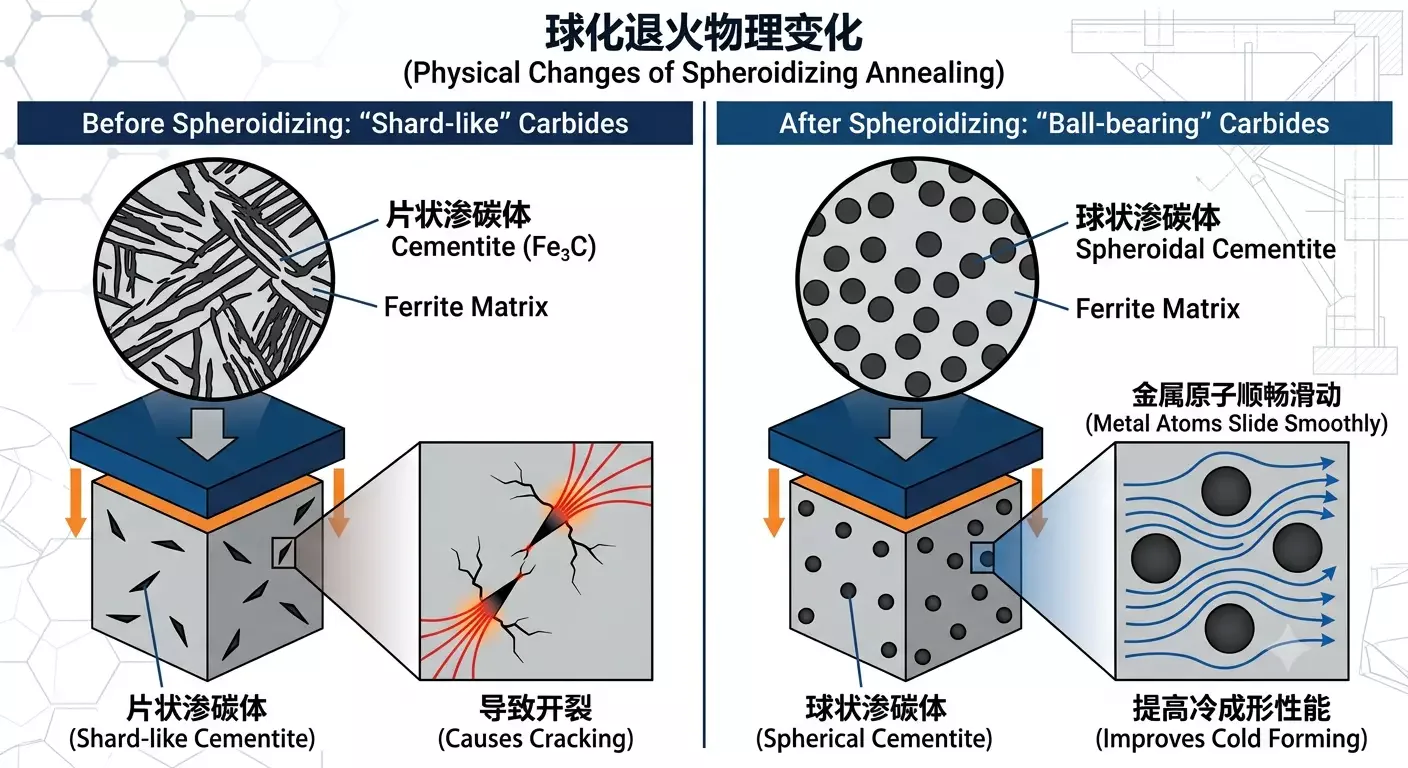
Spheroidizing annealing is a heat treatment process primarily used for medium-carbon steel, high-carbon steel, boron steel, alloy steel, and certain low-carbon steels with high cold-forming performance requirements. Its purpose is to transform the cementite (Fe₃C) within the steel, originally in a "lamellar" or "network" structure, into dispersed spherical particles through prolonged heating and slow cooling. Physical Change: Imagine lamellar cementite as shards of glass that can pierce the metal matrix and cause cracking; in contrast, spheroidal cementite acts like ball bearings, allowing metal atoms to slide smoothly around these "balls" under compression.
1. Definition and Core Principles

2. Why must cold heading use spheroidized wire?
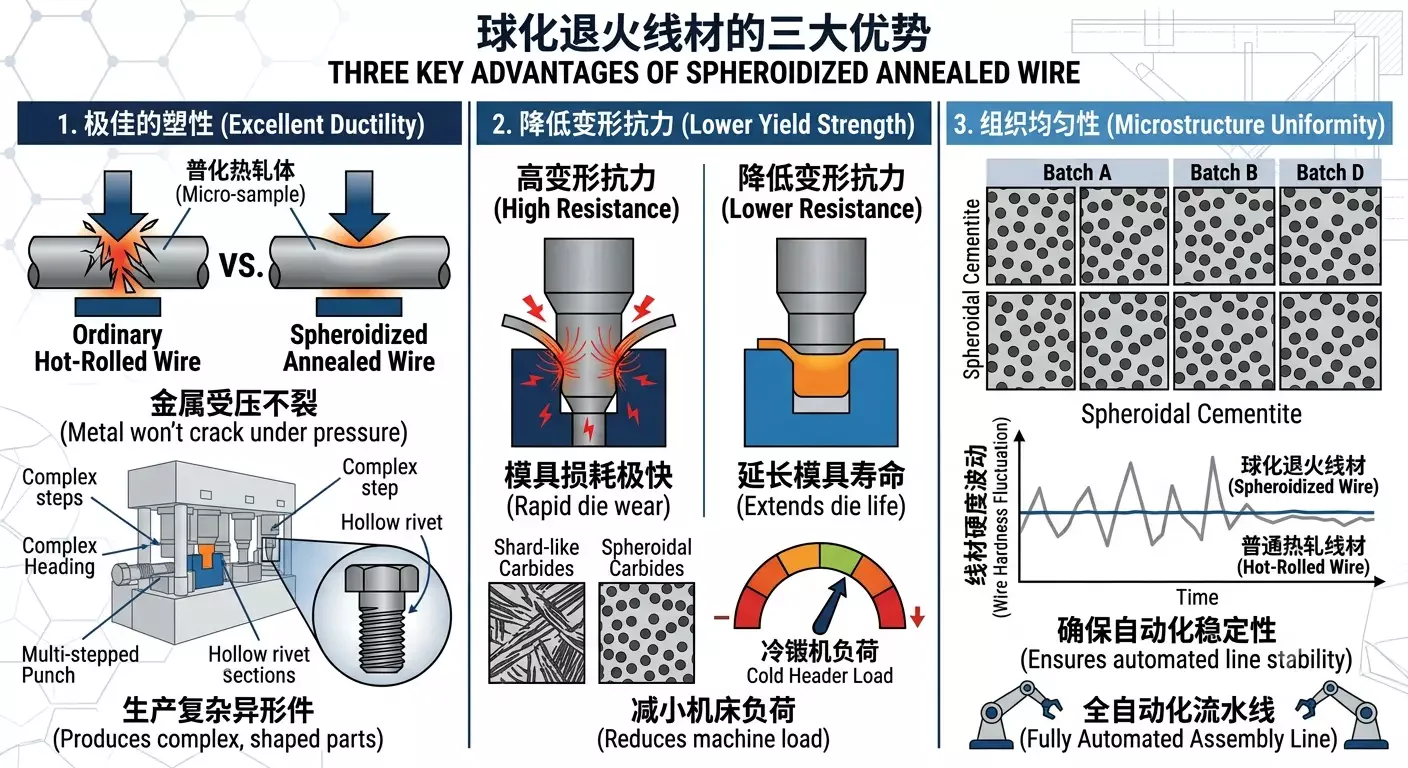
Standard wire rod coils (in hot-rolled condition) are hard and brittle; direct cold heading would cause rapid die wear and even part fracture. Spheroidizing annealed wire offers three major advantages: · Excellent Ductility: The metal can undergo severe deformation without forming micro-cracks under high pressure. This is critical for producing complex shaped parts such as hollow rivets and stepped bolts. · Lower Yield Strength: Reduces the load on cold heading machines and dies, significantly extending the service life of expensive tooling. · Microstructure Uniformity: Ensures minimal hardness fluctuation across batches, guaranteeing stability in fully automated production lines.
2. Why must cold heading use spheroidized wire?

3. Production Process Flow
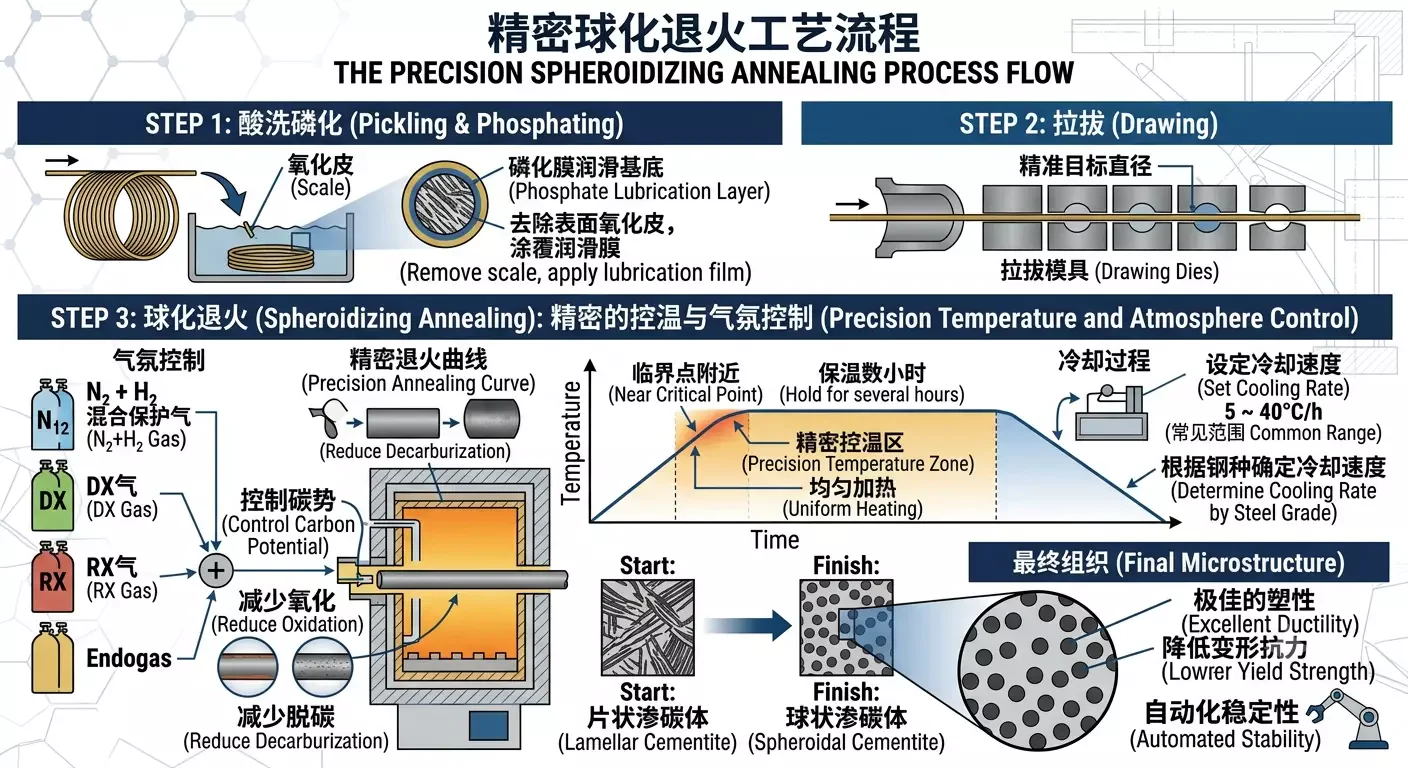
Spheroidizing annealing is not simple "heating"; it is an extremely precise temperature-controlled process: 1. Pickling & Phosphating: Removes surface oxide scale and applies a phosphate coating as a lubrication base. 2. Drawing: Draws the wire down to the precise target diameter. Spheroidizing Annealing: Heated to near the critical point in a protective atmosphere furnace (typically using N₂+H₂ mixed gas, DX gas, RX gas, or Endogas to control carbon potential and reduce oxidation and decarburization), held for several hours, and then cooled at a controlled rate. The cooling rate should be determined based on the steel grade and target microstructure, with a common range of approximately 5–40℃/h.
3. Production Process Flow

Common processing routes for cold heading wire should be determined based on product grade and customer requirements.

RA: PC-RA SA: PC-SA RAIP: PC-RA-PC-D (S)AIP: PC-SA-PC-D SAF: PC-D-SA-PC SAIP: PC-D-SA-PC-D PASAF: PC-LA-PC-D-SA-PC PASAIP: PC-LA-PC-D-SA-PC-D PSASAIP: PC-SA-PC-D-SA-PC-D Where: PC = Pickling and phosphating LA = Low-temperature annealing RA = Normal annealing SA = Spheroidizing annealing D = Drawing HD = Direct drawing AIP = Process annealing
Common processing routes for cold heading wire should be determined based on product grade and customer requirements.

4. Quality Assessment Criteria
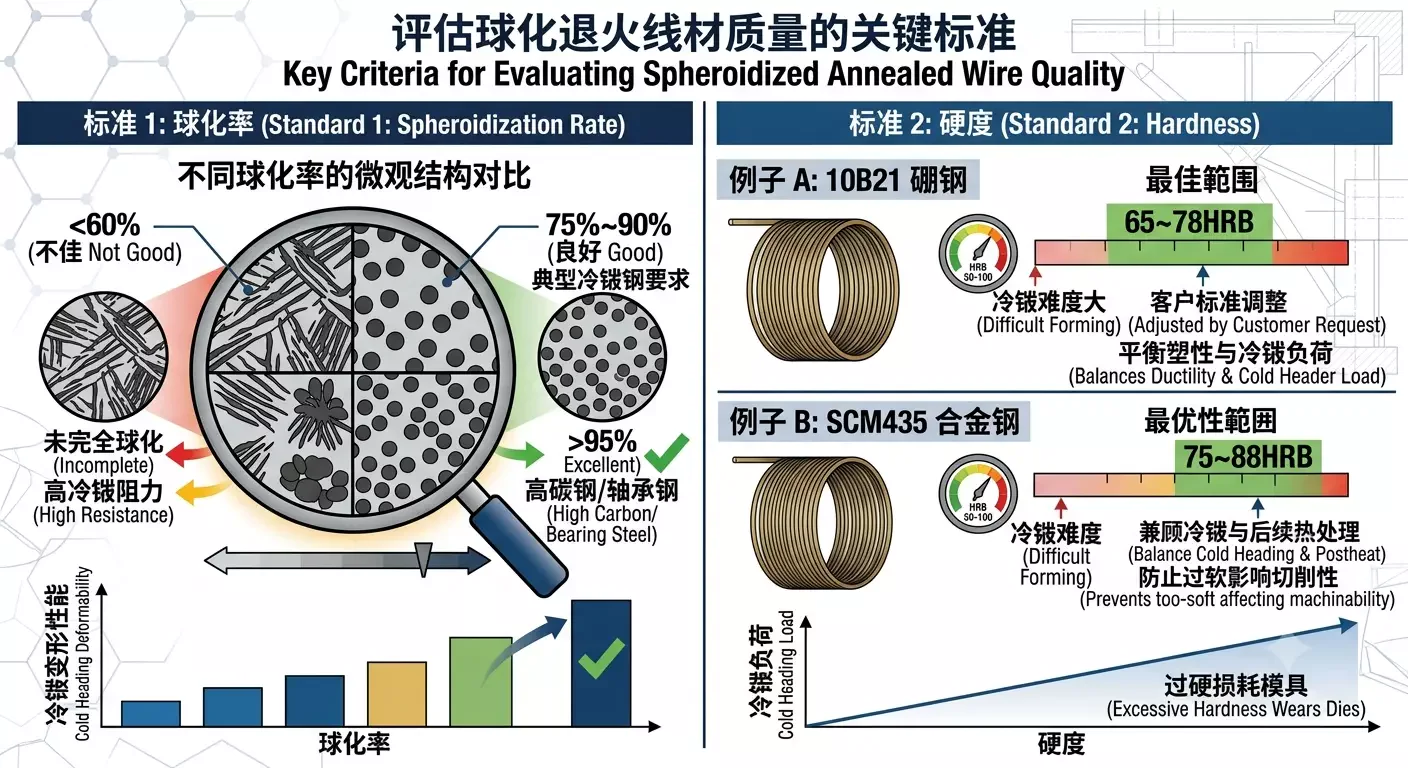
There are typically two criteria for evaluating the quality of spheroidizing annealed wire rod: Spheroidization Rate: The required spheroidization rate is determined by the steel grade and final application. Cold heading steels generally require approximately 60%–90%, while high-carbon steels and bearing steels typically demand a higher degree of spheroidized microstructure. Hardness: For example, the hardness of 10B21 after spheroidizing is usually controlled within the range of 65–78 HRB, adjusted according to cold heading difficulty and customer requirements. The hardness of SCM435 after spheroidizing is typically controlled within the range of 75–88 HRB to balance cold heading performance with subsequent heat treatment requirements.
4. Quality Assessment Criteria

Need more information?

Contact us →
Technical enquiry